Endless Possibilities – Scriptwriting for Animation
Aaron Springer, animator/storyboard artist for SpongeBob SquarePants, and Karsten Kiilerich, filmmaker/co-founder of Scandinavia’s largest animation company A. Film A/S, shared their experiences on scriptwriting for animation. Paul Wells, an expert on (scriptwriting for) animation, was the skilful moderator.
Again it becomes clear that the possibilities of animation are endless. Explicit sex in a teaser for a children’s film? In live action no one would even think of it. But in animation people seem to accept it. At least in Denmark, Karsten Kiilerich jokes. His production company A.Film A/S is responsible for the daring campaign that promotes their film Journey to Saturn (2008). A family film for everyone of 9 years and older.
Pushing boundaries
In the trailer they refer to their earlier film Terkel in Trouble (2004), but not by using the so often heard “From who made Terkel” suddenly are surrounded by all kinds of riches as well as beautiful women. One of them is giving a computer nerd a blowjob. Much more extreme is the animated clip in which seven well-known Danish people talk about the movie. The fake-interviews are quite outrageous, a naked guy runs around with a dildo (although children probably have no idea what it is) and there is a hint at group sex (again, maybe not something children would notice).
People loved it, says Kiilerich, who of course was aware of the risks. His people talked about how difficult it is to control what children are watching, there is so much strange stuff out there. This might change our attitude to what can be shown to young children and adolescents in the future.
The movie itself is not that shocking: a fragment from a cheesy Tiroler porn film is shown, that ends up in the hands of aliens. They obviously get a twisted image of humans. The film is about a few Danish losers who fly to Saturn in search of energy sources. They get into trouble when the planet turns out to be already colonised (by the aliens), which starts off an interplanetary war. Beer plays a big role in solving the conflict. Kiilerich tried to involve different beer brands, but they all thought a children’s movie was not the best place to promote their beer.
Virals
One might wander how such a spicy film got financed, and unmistakably the success of Terkel in Trouble helped a lot. For that film it was much more difficult though. The Danish Film Institute thought it was too nerdy and it would never sell any tickets. Thankfully they were wrong. In Well’s book Scriptwriting one of the directors, Kresten Vestbjerg Andersen, talks about the fact that when people write for and about children they often don’t include them. Children can be very cruel and brutal to each other and the world in general. This is used in Terkel in a humorous way. The funny thing is that schools picked the film up in order to let children recognise their own harassments. This is what is possible in animation, Kiilerich says: you can push the boundaries and even cross them.
Interesting is that both Saturn and Terkel had already a potential audience, because they were based on respectively a cartoon that is very popular in Denmark and a radio play that is written by a known Danish comedian. For Terkel this meant that not only the story but also the timing was already figured out, it just had to be animated.
The teasers of Saturn gave the audience an idea of the feel of the movie, not so much of the storyline. It was true to what people could expect. Virals are not very common yet in Denmark. According to Kiilerich it is a big investment because you have to put it out on the Internet for free, but it is worth it. People sent it around and start talking about it. His experience is that filmmakers think it is great fun, especially because it is not a real ad but just little stories or jokes. To get attention and be shown on television you really have to come up with something new and upfront, Kiilerich advises.
From outline to storyboard
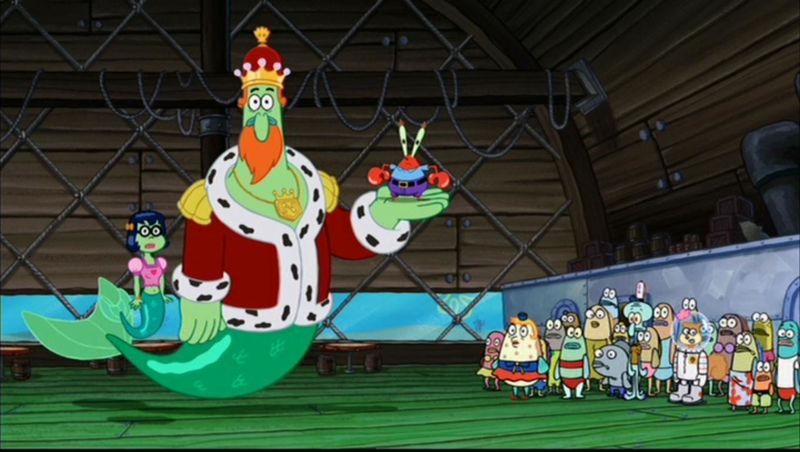
In the development of the series SpongeBob SquarePants Aaron Spinger and the rest of the crew had the feeling they were pushing boundaries all the time. The writing process existed of solving one problem after another, because most people working on it were quite inexperienced. Springer started his career at Spümcø, the studio of Ren and Stimpy creator John Kricfalusi. He was mostly involved in the development of new series. Together they worked on a music video for I Miss You by Björk.
Shortly after that through a friend he came into contact with Stephen Hillenburg, who just got a green light at the network for SpongeBob SquarePants. Some little comics Springer did in his free time did the trick. Hillenburg hired him as one of the storyboard artists. After the three first seasons Springer has worked on and off on the series. He was one of the six writers on SpongeBob SquarePants the Movie (2004).
Springer tells us a little about the development of an episode of the series. It starts with an outline of one or two pages, thought of by four or five people. In the beginning different games were played to generate new ideas, for example by writing words on papers and pulling them out of a hat. Around this ad random combination of words a story was made up. At the moment it becomes more and more a challenge to think of with premises that haven’t come up already.
Pitch
As a storyboard artist Springer tries to think of a way to communicate the ideas that are and make them entertaining. Sometimes a whole scene is based on one sentence that only describes a process that is not funny in itself: they are walking home, they wait for the bus. The storyboard artist has to make that interesting. It happens that large sections of the storyboard are meaningless. There can also be dialogue included in the script that is very helpful. The storyboarding is the place where you come up with gags and think up what actually is going on above and beyond what is happening in the plot. Also the characters really come out here.
The final storyboards are pitched at the network. They have some remarks and then it is revised and prepared to be animated. Most of the time the storyboards are very close to what the final cartoon ends up to. Sometimes the board is too long. Often the really funny stuff, nuances and details is cut out, in order to keep the story moving.
Storyboard driven
In about four weeks Springer, with the help of a couple of guys, fabricates the final storyboard. In the beginning of the series a rough version was made in a week, after which everybody came together to discuss it. The good stuff was used, the rest thrown away, after which they started all over.
Kiilerich thinks this is very quick and efficient. His company makes sure the script is perfect before the storyboarding begins, because the drawing takes so much more time. Clearly the people from SpongeBob do the storyboarding really fast. Kiilerich also has the problem that the broadcasters want to see a finalised script.
Stephen Hillenburg is known to be a strong advocate of storyboard driven animation, like for instance the series Ren and Stimpy and Rocko’s Modern Life (where Hillenburg started his career) in which storyboard artists sort of write the stories. During his visit to the Netherlands, Springer turns out to be extremely modest, but according to Hillenburg he helped expand the comic possibilities of SpongeBob and influenced how it evolved. That is exactly what Hillenburg likes about Periwinkle – Around the World, a project Springer did for Cartoon Network. Hillenburg loves how it has hardly any dialogue and focuses on visual humour, a humour that appeals to young and old.
Bob Ross
Springer tells about how he pitched Periwinkle as a series. But before he got a change to present the storyboarding for one episode he got a call in which Cartoon Network proposed to do 5 episodes of 2 minutes. Springer thinks because somebody was interested in producing content for cell phones. He just wanted the project to get going and agreed.
Periwinkle is a platypus that travels around the world and gets into trouble everywhere he goes. It struck Wells that Periwinkle goes back to formative cartoon principles, where the key characters have one or two dominant traits that come up in a situation where everything works against them. From a basic premise a whole story world is build up. Springer agrees. It starts with thinking up different locations that Periwinkle could visit. From there the story is build up step by step, almost the way Bob Ross is building up his paintings. Maybe Periwinkle is in a Japanese garden, what is there? Maybe there is a koi pond. And so on. It is really simple, Springer says, you just think up some gags.
Wells ads that what’s beautiful in animation is that not only the character can generate ideas, but also the location or the actions of that character. By exploiting that, a very small situation can offer some very large story principles. According to Springer it is not about the situation itself, but about what the character is thinking, that is where the fun comes from. Getting inside the characters heads.
Periwinkle
The two-minute concept helped to strengthen the character. Everything had to be stripped away; there was no need to think about where Periwinkle lives, or who the other characters were. He had to distillate it down to just the essence of who this guy was. That was necessary, because he is the one that gets the story going. Figuring out what decisions the character would make inside a certain situation, that is what writing is for Springer.
According to Wells the process in which a character solves a particular set of hurdles, is inevitably the writer’s process as well. That is what it makes it unique to that character, Springer agrees. Not his occupation, not a type of person or an age, but what is inside him makes a character what it is. A common mistake in scriptwriting is that characters are mostly described in qualities and qualifications instead of in what they do.
Kiilerich thinks Periwinkle is very funny on all levels. It should be a very successful show, he thinks. Maybe Facebook or YouTube might be useful to get it across to people. It is not to be found on the Internet now, which is a shame. Springer is not very interested in these media, mostly because he doesn’t want to be influenced by opinions of others. With his film Korgoth of Barberia (2006) he saw that the network used YouTube almost as market research tool. They knew exactly how many hits it received.
Animated documentaries
One of the great things of animation for Kiilerich is that you can bring across pretty heavy messages. Because the world is graphic, you can work more freely. It is possible to make films that parents as well as children like. Not family films, but films that are appreciated by people from all ages. His documentary When Life Departs (1997) is an example. The idea for the Oscar-nominated short animation documentary sprang out of all the questions his kids asked him after the death of his father. He was a religious man and had told the kids all these stories about God and heaven.
Kiilerich didn’t really know what to tell them, not really being religious. So he changed the question around and asked them what they thought would happen, which brought up all these interesting thoughts. After that he interviewed children in all kinds of situations about their concept of death, for instance in a hospital specialised on cancer. He thinks back on it as a wonderful experience. Wells stresses that if one works with children it is very important to get permission for everything.
Animated documentaries are often based on the authenticity of sound, unpacking people’s subjective stories or illustrating their experiences and inner life. It is a booming area, with comedy at one end of the spectrum, like Aardman’s Creature Comforts. Here interviews of inhabitants of a housing project and an old people’s home are used and are animals from a zoo given voices. At the other end of the spectrum there are films like Dennis Tupicoff’s His Mother’s Voice. It is based on a radio interview with a mother whose son has just been murdered.
Phineas and Ferb
Animation is especially good at revealing inner states and depicting thoughts, dreams, fantasies and their imagination and Wells puts into words some general ideas on scriptwriting by analysing Phineas and Ferb. The show is created by Doug Lawrence (Plankton in SpongeBob, on which he is one of the writers) and Jeff “Swampy” Marsh (one of the directors of Rocko’s Modern Life, where Lawrence also was a writer).
In the title song the premise of the story becomes clear: two brothers are going to spend their summer vacation and try to decide what to do. They describe all these possibilities and at the end of the song their sister Candace springs into the screen saying: Mom! Phineas and Ferb are making a title sequence!” In a song of only a minute a whole world is created.
If you develop animation, you have to create an inner logic of your world, advices Wells. And if that logic works for that world, you create something unique what probably is going to affect people. The flexible and versatile language of animation, narratively and formally, helps you to tell stories. With Periwinkle and When Life Departs you couldn’t have more different ways to make use of animation. The flexibility of animation however, enables both to create alternative worlds that are highly persuasive and highly engaging.
Most scenarios are recognisable at a domestic level – as a real, material world – but often also at a fantastical level, where things are imaginative, surreal, alternative. Animation is very good at portraying that. In Phineas and Ferb imagination is promoted in highly socialised contexts. Phineas and Ferb are children and they represent children as well, but they are living in a social context and they are socialised in a certain way. They undertake impossible tasks and projects as if they are normal play activities. We can see the logic of that in the way children behave.
Visually literate audience
It also engages with mythic or imaginary worlds as if they are real. And that is really important. We are all aware of huge amounts of narratives every day of our lives. We talk to each other and tell each other stories. Here they are using that in a helpful way. They are authenticating surreal situations by validating a purpose for them. Often scriptwriters tend to forget that. They create a situation out of nothing and think that is persuasive of itself. But if you find a validating purpose for that scene, it is much more enriched and powerful accordingly.
The show has a subplot that is centred on the children’s pet, a platypus, just like Periwinkle. It is living in an alternative spy adventure, where it is fighting an evil genius. Subplots and parallel stories are very important.
It has a very reflective and self-reflective use of narrative form, comic events and animation. Like a lot of contemporary animation it is very self-conscious, it is being deliberately very ironic, it is speaking to an acknowledgeable, visually literate audience. It sometimes helps when you are writing to position yourself when you expect a certain literacy of your audience. These can be seen as general points to maybe make clear how stories, narrative, audience and children might be understood.